01
One immersive workspace
Panorama, PTZ video, ambient audio, radio, flight tracking and weather remain visible and accessible inside one consistent VR environment.

Virtual air traffic services workspace
VisionATS brings the airport view, communication, flight data, weather and operational tools into one immersive VR environment. Flight information service officers can provide AFIS without being tied to a physical tower or a fixed remote tower centre — so aerodromes can access qualified AFIS coverage without recruiting, training or rostering staff of their own.
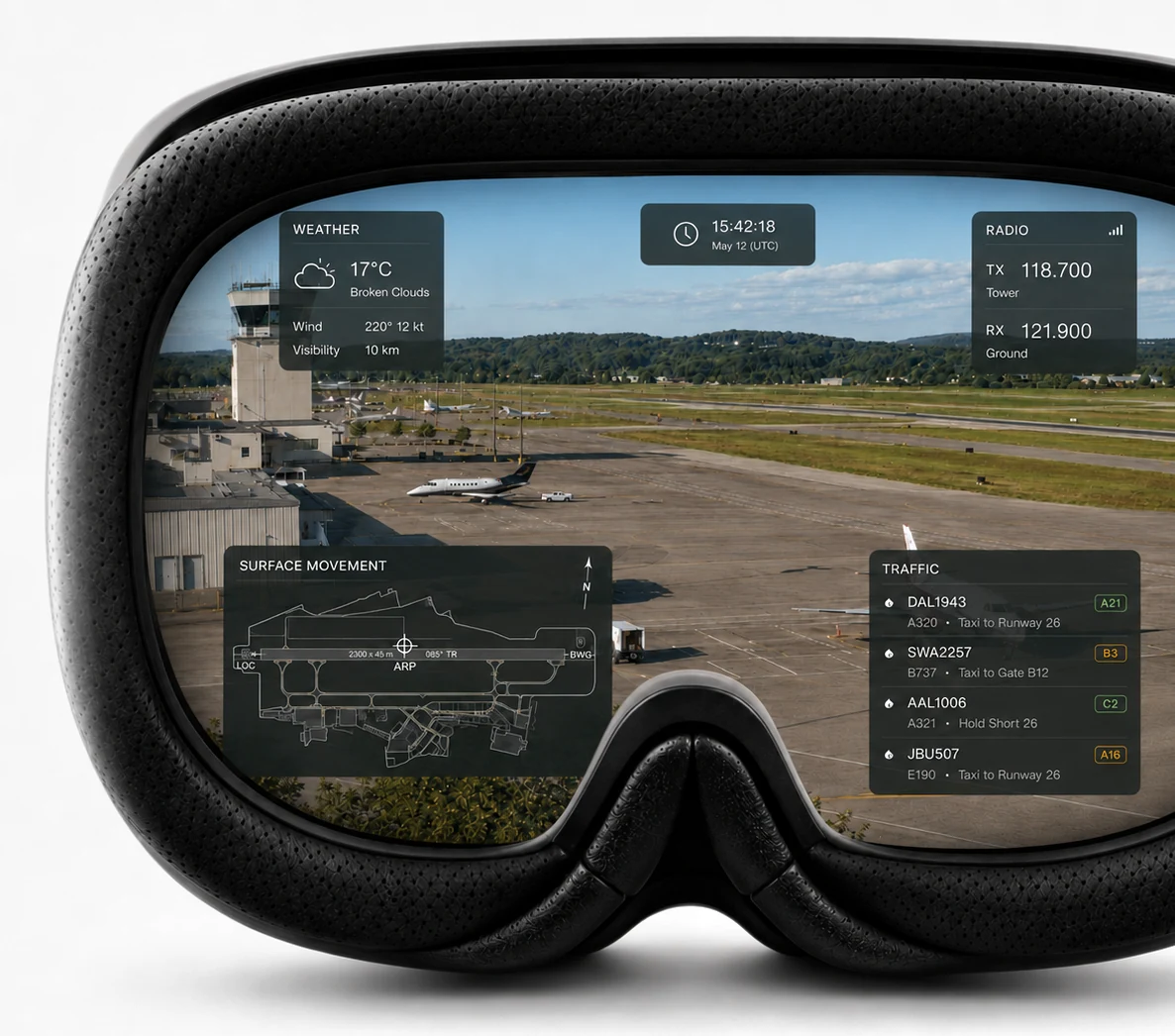
Beyond the remote tower center
Conventional remote towers move the view away from the airport. VisionATS goes further and virtualises the entire tower working position, including the outside view, communication, operational data and interaction.
Panorama, PTZ video, ambient audio, radio, flight tracking and weather remain visible and accessible inside one consistent VR environment.
Authorized operators can connect from a suitable remote location instead of a dedicated tower building or fixed workstation.
Layouts and configurations can be standardized, replicated and adapted without replacing purpose built display walls.
A compact local installation captures the airport environment. Edge processing prepares the data, secure connectivity transports it and VisionATS presents the complete workspace to the operator.
Human centered interface
The virtual environment keeps operational information close to the outside view. Panels can be positioned consistently, adjusted to the airport and displayed only when they are relevant.
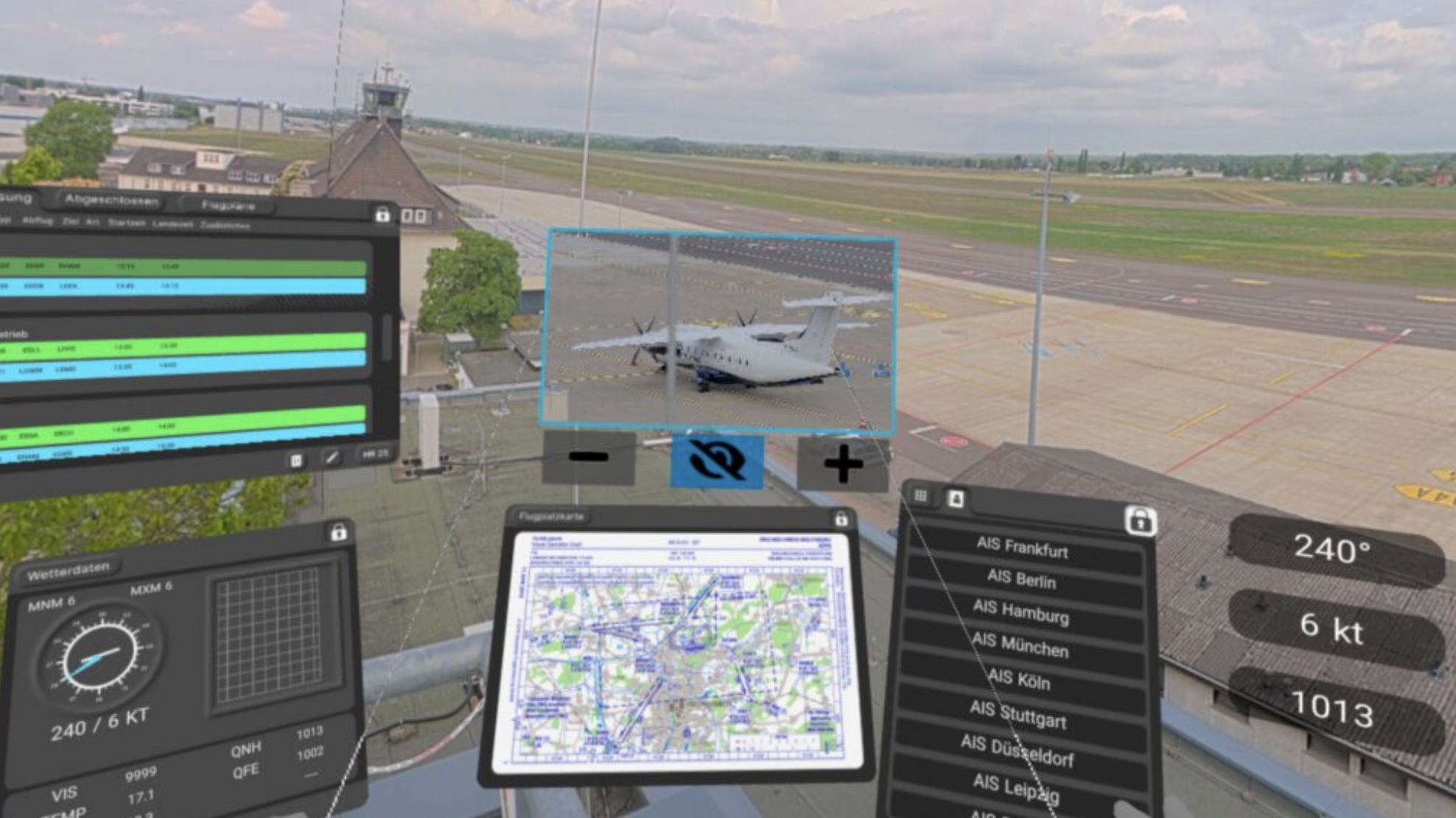
Designed for network operations
Connect airport sensor sites with a flexible operator pool. Add capacity when traffic increases, provide specialized services when required and enable access for additional authorized stakeholders.
 VISIONATSWORKSPACE LAYER
Operational use cases
VisionATS can support permanent operations, flexible service windows and situations where rapid remote access creates operational value.
Access AFIS coverage as a service, without employing, training or rostering officers on site. Staffing can flex up or down on demand, and upgrading from a basic information service to AFIS enables more and higher value flight operations, increasing revenue without the cost of employing staff locally.
Skip the investment in renovating or extending a physical tower and redirect the freed up funds toward other airport priorities.
Maintain service continuity during tower outages, maintenance, renovation or local emergencies.
Frequently asked questions
VisionATS is a technology and operating concept. Operational use requires a validated implementation, suitable procedures and approval by the responsible authorities.
That is the target: a complete replacement of the tower workplace by a VR based working position. The final scope always depends on the airport, service type and approved operating concept.
AFIS is where a virtual working position can realistically be introduced first. The technical demands and the certification effort are considerably lower than for air traffic control, and the aerodromes that struggle most with the cost of a staffed tower are precisely those providing an information service. That is where VisionATS delivers value today.
No, that is not needed. VisionATS can provide qualified AFIS officers through a shared operator pool, so aerodromes do not have to recruit, train or roster staff themselves.
The monthly rental model is based on a fixed fee per site. The fee covers the use of the complete technical system, including the hardware, software and ongoing system availability. Initial development costs are distributed across multiple customers, while the customer avoids a high upfront investment. Additional operational or AFIS services can be charged separately, depending on the required scope. This provides the customer with predictable monthly costs while allowing us to refinance the hardware, development, maintenance and support over the contract period.
Start a conversation
Tell us about your airport, current service model and operational goals. We will discuss a suitable concept and the next validation steps.